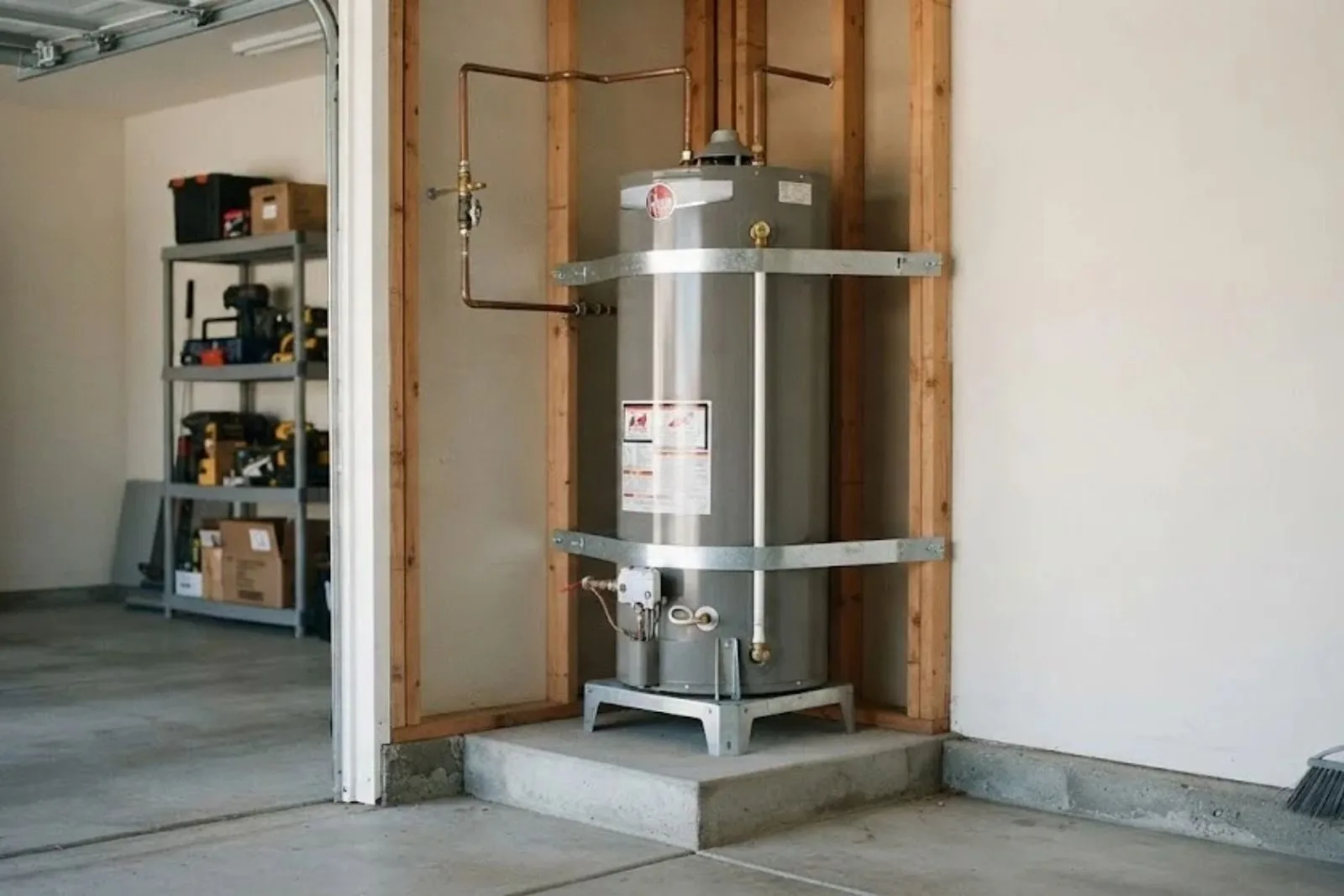
When a dead tank is an emergency
A tank that is leaking from the shell is on borrowed time. Steel tanks corrode from the inside, and once the shell is breached there is no patch. The longer the leak runs, the more subfloor and drywall get wet.
Treat these as urgent: water at the base of the tank, rust-colored hot water, a tank that has stopped heating for a household that cannot wait, and a relief valve that discharges on its own.
SizingHow we pick the right size
Size depends on how many people shower, run the dishwasher and do laundry in the same window. A forty gallon tank suits one or two people. A fifty gallon tank is the common choice for families of three or four. Larger households or a soaking tub usually call for a bigger tank or a faster recovery rate.
We also check the first hour rating, which tells you how much hot water the heater can deliver in a busy hour. That number matters more than tank size alone.
Keeping an old tank running
- Repairs repeat as the shell ages
- A sudden leak can flood a garage or closet
- Higher energy use as sediment builds
- No warranty on the old unit
Replacing it now
- A new tank carries a manufacturer warranty
- The swap is planned instead of an emergency
- Fresh anode rod and clean tank floor
- Code-current relief valve and discharge pipe
What happens during the swap
Shut off and drain
We close the water and fuel, then drain the old tank to a safe point.
Disconnect and remove
The old unit comes out and leaves with us.
Set and connect
The new tank is set level in a pan where the space allows, with new connectors and a relief valve.
Test and explain
We purge air, check for leaks, test combustion on gas units and set the temperature.
On a gas heater we check the flue draft and the gas line for leaks. On an electric unit we confirm the breaker and wiring match the heater. Permit rules vary, so ask the Town of Prescott Valley building department whether a permit applies to your swap, and your plumber will explain what is needed.
Codes and standards
Both model plumbing codes, the UPC and the IPC, call for a temperature and pressure relief valve on a storage water heater, with a discharge pipe routed to a safe spot. Permit rules vary, so ask the Town of Prescott Valley building department what applies to your swap.
Want your real number?
Tell the dispatcher the tank size and fuel type and we can price the swap on the call.
If you are weighing a design change, our water heater installation page covers relocating a unit, and the tankless water heater page explains when an on-demand unit makes sense. If the problem is smaller, water heater repair may be all you need.
FAQsQuestions about water heater replacement in Prescott Valley
Yes. A failed tank is an emergency and we take those calls around the clock. We offer same-day replacement when stock and schedule allow, and the dispatcher will tell you the earliest window for your address.
Age and leaks decide it. A tank past about ten years that is leaking from the shell needs replacement. A younger tank with a failed part is usually worth repairing.
Most standard swaps take a few hours. Moving the unit, changing fuel types or fixing old venting can add time. The plumber gives you an expected window when you call.
Yes. The old tank is drained, disconnected and hauled away as part of the replacement.
Policies commonly cover sudden damage from a burst or leaking tank but not the cost of the tank itself. Check your own policy, and document the damage with photos before cleanup.
It depends on the number of people and how many hot water uses overlap in the morning. We check the first hour rating and recommend a size for your household.