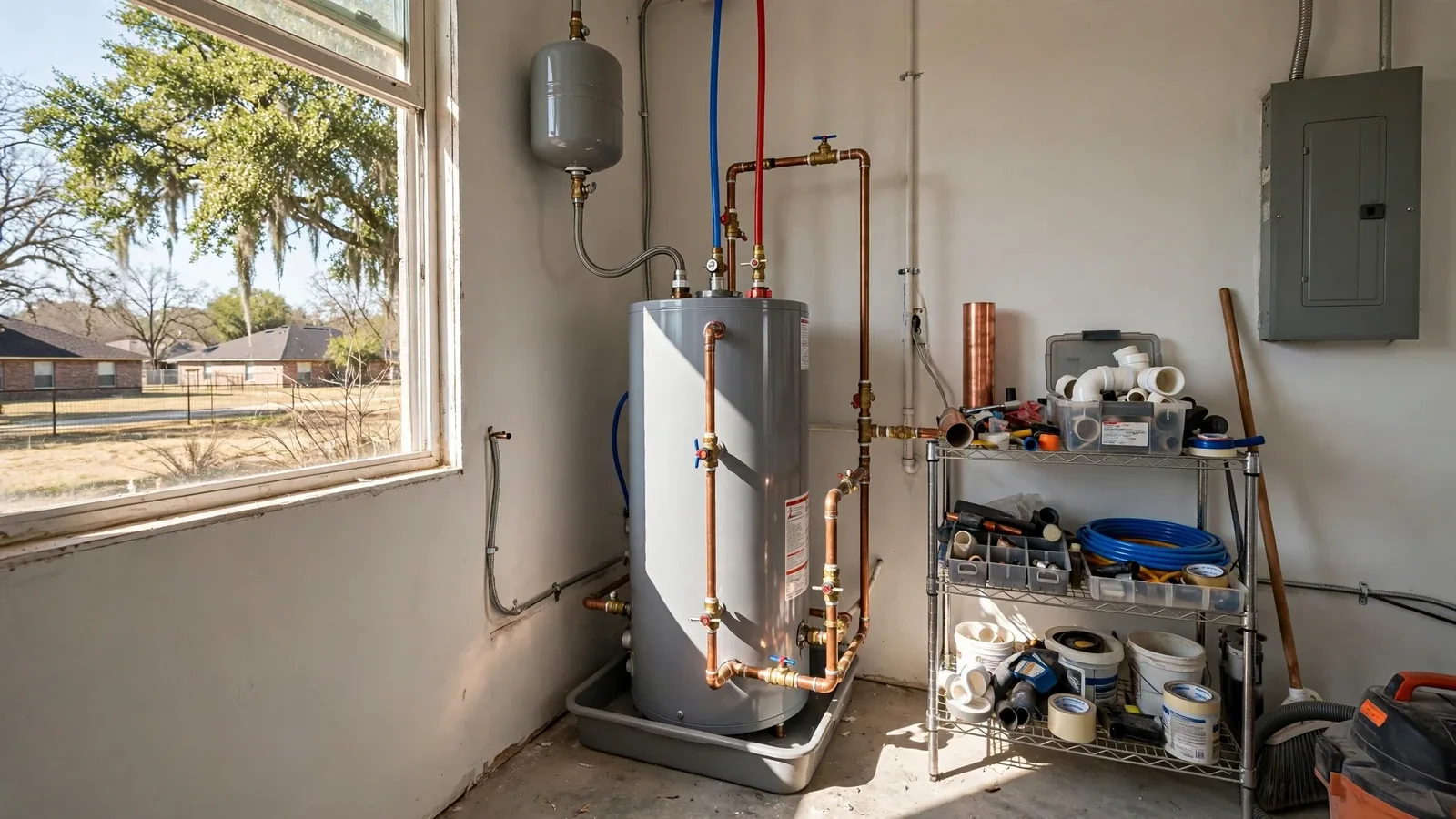
Where the heater goes matters
A water heater needs air, clearance and a drain path. Gas units need combustion air and a flue that rises continuously to the roof. Electric units need clearance for service and a circuit sized to the heater.
We also look at where a leak would go. A pan with a drain line to a safe spot protects drywall and subfloor if the tank ever fails, and that is an easy detail to add during a new install.
Local climateGarage and exterior closet installs in a cold-nights town
Prescott Valley averages a January low of roughly 26 degrees Fahrenheit at about 5,100 feet. Many homes put the heater in a garage or an exterior closet. Pipes on exterior walls and in unheated garages need insulation to hold temperature and resist freezing.
We insulate exposed hot and cold lines near the heater and recommend a heater location that stays out of the worst cold when the layout allows.
| Choice | What it affects | Our usual guidance |
|---|---|---|
| Tank size | Hot water supply in a busy morning | Match to household and first hour rating |
| Fuel type | Operating cost and venting needs | Use what the home is already piped or wired for |
| Expansion tank | Pressure spikes in a closed system | Add it when the supply has a backflow or pressure valve |
| Drain pan and line | Leak protection | Use one wherever damage would be costly |
| Tankless option | Space and on-demand supply | See the tankless page for fit and cost |
What a clean install includes
- New water connectors and shutoff valves at the heater
- Temperature and pressure relief valve with a proper discharge pipe
- Gas line connection tested for leaks, or a properly sized electric circuit
- Venting set at a continuous rise for gas units
- Thermal expansion tank where the plumbing is a closed system
- Final test: purge, leak check, temperature set and a walk-through
Permit rules vary, so ask the Town of Prescott Valley building department whether your project needs one. We tell you what to expect before scheduling.
Codes and standards
New heaters should be installed according to the maker instructions and the locally adopted plumbing code, whether that is the UPC or the IPC. Gas appliances are tested to ANSI Z21 standards, and the installation manual sets clearances and venting.
Planning a remodel or a move for your heater?
Describe the space and the fuel type and we can talk through options on the call.
If your current heater has already failed, go to water heater replacement for a same-day swap. A simpler problem may be solved by water heater repair. For homes that want endless hot water, see tankless installation and flushing.
FAQsQuestions about water heater installation in Prescott Valley
Yes. Relocating a heater means new supply and drain lines and, for gas, a new vent and gas run. We look at the space first and explain the work before scheduling.
Many homes with a pressure regulator or a backflow device on the supply need one, because heated water has nowhere to expand. The plumber checks your supply and advises.
Choose based on household size, bathroom count and any large tubs. We check the first hour rating, not just gallons.
Most standard installs take several hours. Gas venting changes, relocations and electrical work can take longer. You will get a window when you book.
Yes for the connection and testing at the appliance. Larger gas line changes are scoped on site so the price matches the actual work.