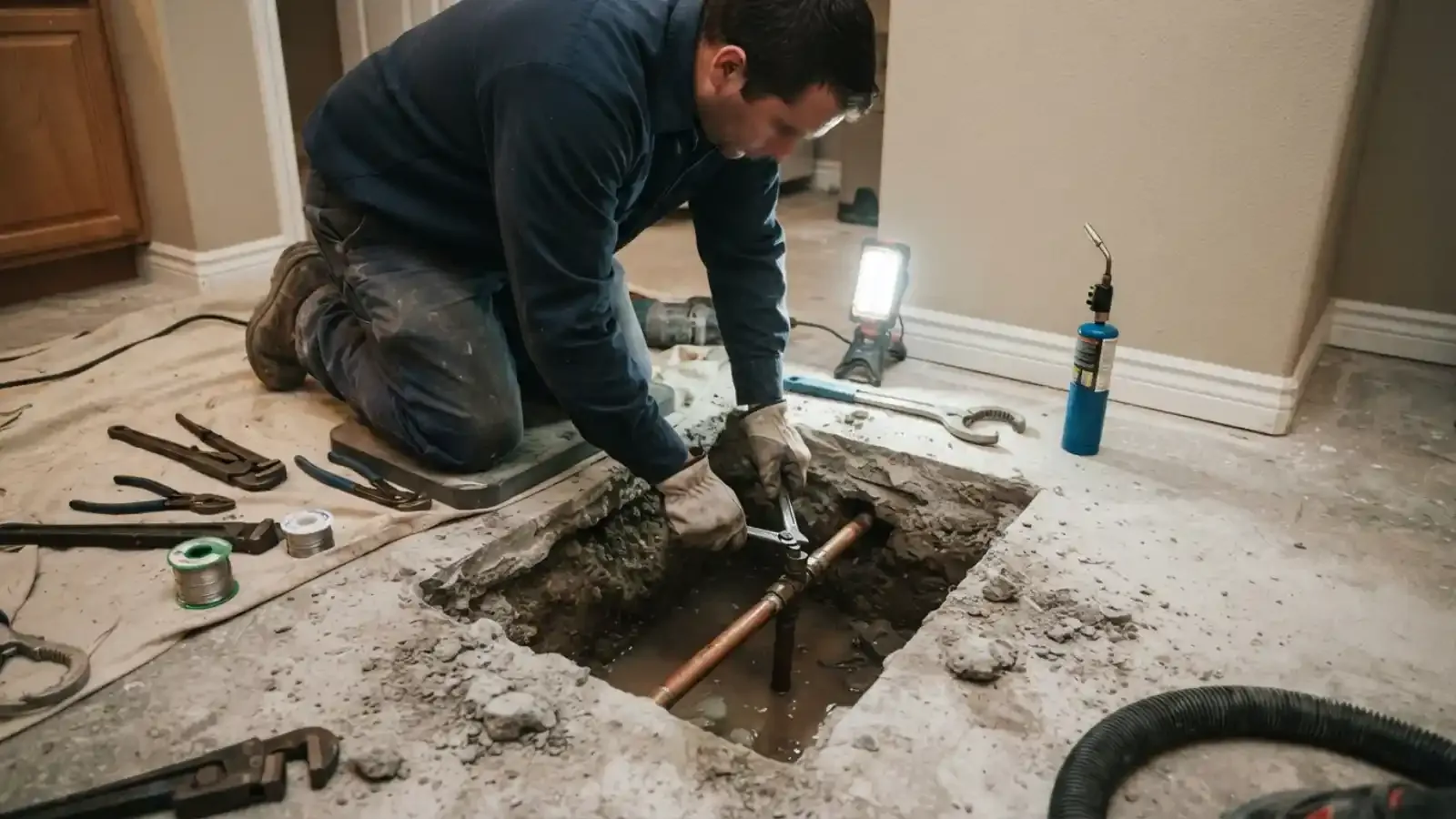
A slab leak is an emergency
Water under a slab erodes the soil that supports the concrete. It can lift or crack the slab, soak the floor and raise the risk of mold. Even a small leak keeps running and adds to your bill.
Close the main valve and call the 24/7 line. Do not break into the floor yourself. Water and electrical circuits mix in ways that are hard to see.
SignsHow to recognize a slab leak
A warm patch on the floor
A hot water line is leaking under the slab and heating the concrete above it.
A meter that keeps moving
Water use continues with every fixture off.
The sound of running water
A hiss or trickle with nothing running.
Damp or lifted flooring
Moisture rises through concrete and shows up in carpet or tile.
How we find and fix it
Confirm a leak exists
A meter and pressure test shows the line is losing water.
Pinpoint the spot
Acoustic and thermal tools locate the leak under the slab.
Choose the repair
We compare spot repair, a reroute through walls or attic and a full repipe.
Fix and test
The line is repaired or replaced, pressure-tested and the floor is patched.
Spot repair under the slab
- Opens a small hole in the concrete
- Quickest for a single failure
- Does not address other worn lines
- Lower cost for a one-time fix
Reroute or repipe
- Runs new lines in walls or the attic, away from the slab
- Avoids concrete cutting
- Replaces suspect pipe
- Best when pipes are worn or leaks repeat
Why slab leaks happen
Copper pipe can develop pinholes from corrosion, abrasion or poor water chemistry. Pipes rub against concrete as the house expands and contracts with temperature. Soil movement can stress a line.
Ask your water utility for its annual water quality report, or test your tap, if you want to learn more about the water in your lines. Water chemistry plays a role in how fast metal pipe ages.
Not every Prescott Valley home has a slab foundation. Some homes are built over crawlspaces, and in those homes we look under the floor instead. A technician confirms the foundation type on the first visit.
Codes and standards
Copper water tube for building supply is made to ASTM B88, and pipe in contact with drinking water should carry NSF/ANSI 61 certification. Both are published standards that apply to any repair or reroute we price.
Hearing water and nobody is using any?
Call the 24/7 line. We will help you confirm the leak and schedule a locate visit.
If you are not sure whether the leak is under the slab, start with leak detection. When the pipe is worn out all over the house, repiping solves the root problem. For a break that has already flooded part of the home, see burst pipe repair.
FAQsQuestions about slab leak repair in Prescott Valley
Yes. A slab leak is urgent and the 24/7 line takes those calls day and night. We offer same-day appointments when available, and the dispatcher confirms the earliest window for your address.
A warm floor spot, a meter that moves with all water off, the sound of running water and a sudden bill increase are the common signs.
Sometimes. Rerouting lines through walls or the attic avoids cutting the slab. A spot repair opens a small section of concrete.
A spot repair can take a day. A reroute or repipe takes longer. We give a window after locating the leak.
Many policies cover water damage but not the failed pipe. Some cover access to the leak. Read your policy and keep the leak report.
It can undermine the soil under a slab, damage flooring and promote mold. Water near electrical circuits is also a hazard, so shut off the main valve and call.