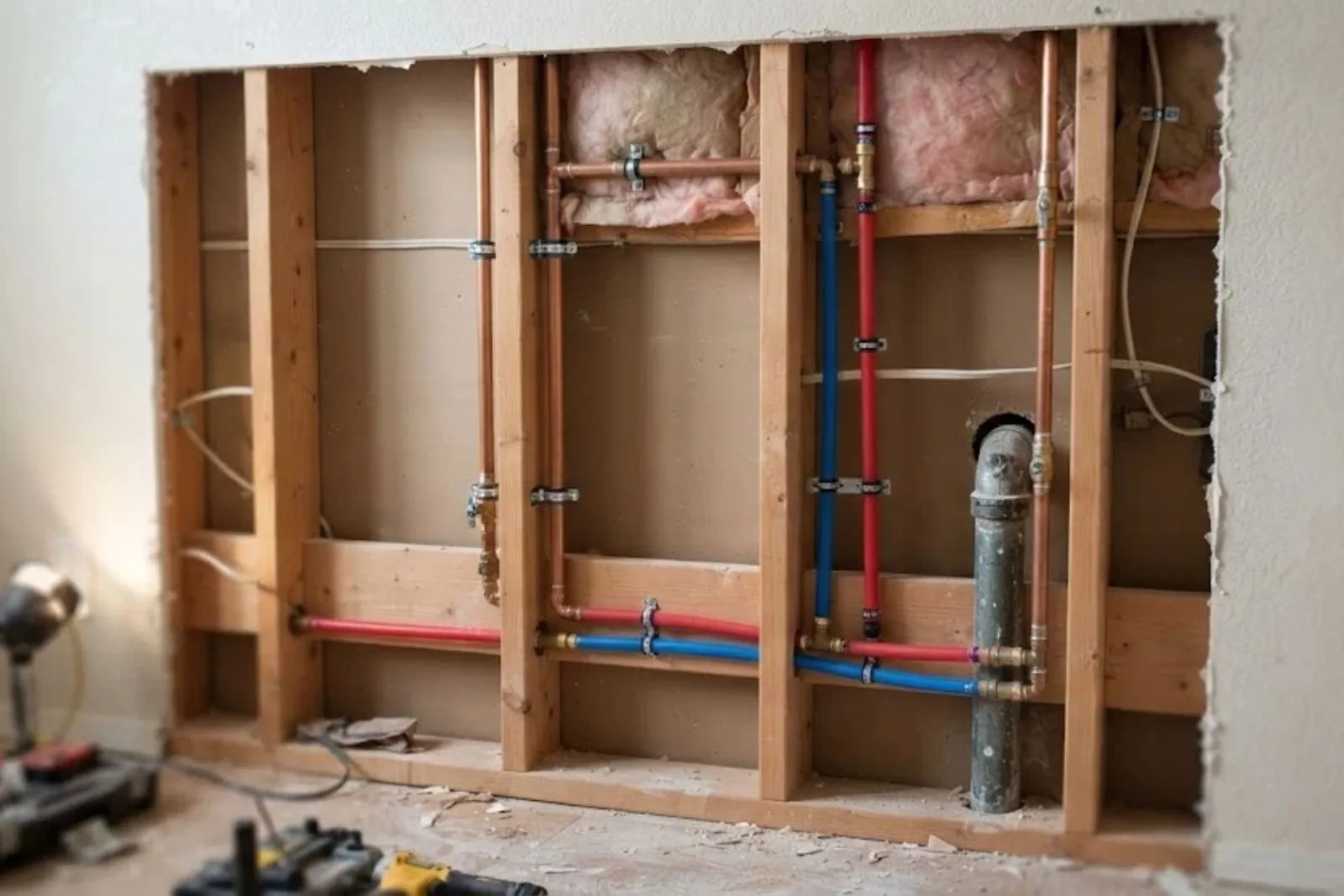
Signs your pipes are due
Common reasons we recommend a repipe
- Leaks that return after repairs, in different spots
- Galvanized steel pipe with rust-brown water and low pressure
- Pinhole leaks in copper along several runs
- Old polybutylene supply lines
- A remodel that opens walls anyway
PEX or copper
| Material | Strengths | Things to weigh |
|---|---|---|
| PEX | Flexible, fewer fittings, quicker install, resists splitting in a freeze better than rigid pipe | Not for outdoor sunlight exposure, needs proper support |
| Copper | Long record, handles heat, familiar to inspectors | More joints, higher material cost, can pinhole in some water |
| CPVC | Lower cost | Can turn brittle with age and heat |
For most homes we recommend PEX, because it runs through walls with fewer cuts and tolerates a cold snap better than rigid pipe. We choose copper where a customer prefers it or where a run is exposed and needs a rigid material.
ProcessHow a repipe is planned
Survey the home
We map fixtures, shutoffs and existing pipe and look at access in attics and crawlspaces.
Plan the routes
New lines go through attic, crawlspace or walls with as few openings as possible.
Stage the work
We keep water on where we can and work room by room.
Patch and test
Every line is pressure-tested, and we patch access holes for painting.
Whole house or partial
A partial repipe replaces one run, such as the line to a bathroom or the hot side of the house. It makes sense when the rest of the plumbing is sound. A whole-house repipe makes sense when galvanized steel, polybutylene or heavily pinholed copper runs through the home.
Prescott Valley homes mostly date from after 1990, based on census growth, so many will have copper or PEX already. Older homes in Dewey-Humboldt and Chino Valley can still have galvanized steel, and a quick pipe inspection tells you which you have.
What to expectLiving in the house during a repipe
Most homeowners stay in the house during a repipe. The plumber coordinates water shutoffs by area and usually restores water at the end of each day. Plan for dust, noise and short periods without water at specific fixtures.
Move furniture away from walls where access holes will be cut, and protect floors. Pets and children should stay clear of work zones. We explain the schedule before we start so you can plan around it.
Prepare your home
- Clear closets and cabinets along the planned routes
- Move valuables and art off walls near the work
- Keep a supply of drinking water on hand for the short shutoffs
- Tell the plumber about known problem areas such as old patches or low-pressure fixtures
- Plan for painting after drywall is patched
Codes and standards
PEX tubing for drinking water is made to ASTM F876 and its fittings to ASTM F877, and potable pipe should carry NSF/ANSI 61 certification. Copper tube follows ASTM B88. We use certified materials and follow the maker instructions.
Tired of patching leaks?
Call and ask whether a repipe makes sense for your home.
A repipe often follows a series of repairs. If you only need to find where water is escaping, leak detection comes first. A single failed line outside is covered under water line repair. For a pipe that has already burst, see burst pipe repair.
FAQsQuestions about repiping in Prescott Valley
Repeated leaks, rusty water, low pressure and old steel or polybutylene pipe are the usual signs. A plumber can inspect and tell you which you have.
Many homes take a few days, depending on size and access. We stage the work to keep water on when possible.
Yes. Galvanized steel corrodes from the inside, so replacement is the lasting fix once low pressure and rust appear.
PEX made for potable water carries NSF and ANSI approvals. We use approved materials and follow manufacturer instructions.
It involves some openings, kept as small as the layout allows. We patch drywall and leave the finish painting to you or a painter.