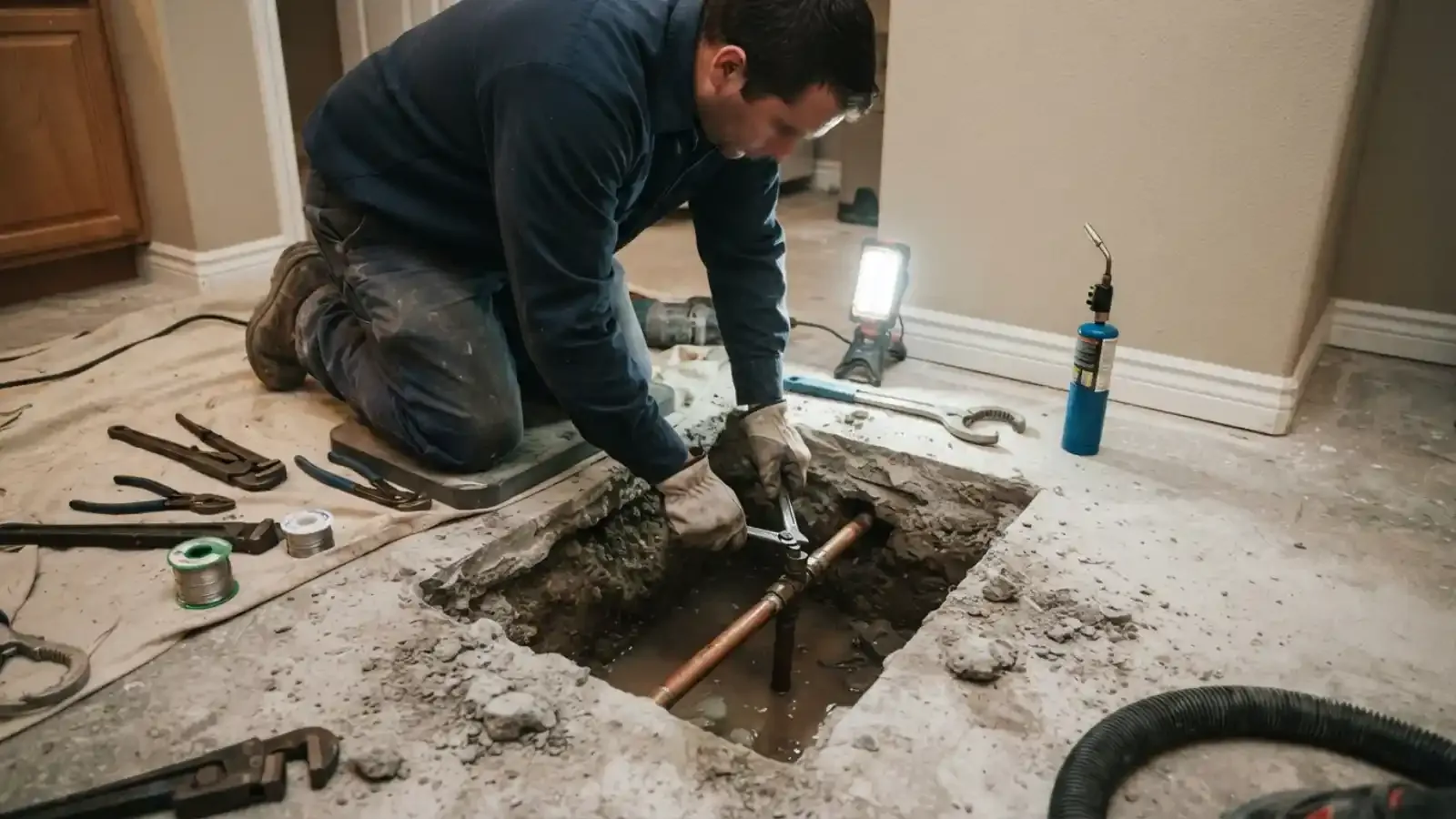
Warning signs of a slab leak
A warm spot on the floor
A leaking hot water line can heat the concrete above it.
The sound of running water
A hiss or trickle with everything off.
A moving water meter
The dial turns when no one is using water.
Damp carpet or lifted flooring
Water pushing up through the slab shows at the surface.
Low water pressure
A leak in a supply line can drop pressure.
A rising water bill
Bills climb without a change in habits.
The homeowner test
- Turn off every fixture and appliance that uses water.
- Check the water meter. If the leak indicator moves, water is escaping.
- Close the main shutoff at the house and watch the meter. If it stops, the leak is inside the house or under it.
- Feel the floors for warm spots with bare feet.
- Listen along walls and floors for faint running water.
If the meter moves with the house shutoff closed, the leak is between the meter and the house. That is a water line issue, not a slab leak.
LocatingHow a plumber pinpoints it
| Method | What it finds | Notes |
|---|---|---|
| Pressure test | Which line is losing pressure | Isolates hot, cold and zones |
| Acoustic listening | The sound of escaping water | Works on pressurized lines |
| Thermal imaging | Warm paths from hot water leaks | Best on hot lines |
| Tracer gas | Tiny leaks in sealed lines | Used when sound is faint |
| Moisture meter | Wet floor and wall material | Confirms damage extent |
The plumber marks the leak on the floor with a locator before any cutting. That keeps the opening small.
Our leak detection page explains the tools in more detail, and slab leak repair covers the repair choices after a leak is located.
RisksWhy it should not wait
Water under a slab can soften the soil that supports it and lead to cracking. It can also raise humidity and encourage mold. A small leak keeps running and the damage grows quietly.
PrepareWhat to document before the plumber arrives
Gather this information
- Meter readings with the date and time
- Photos of any damp, warm or lifted floor areas
- Your water bills for the last several months
- The age of the home and any pipe repairs you know about
- Your homeowner policy number and the claims line
These records speed up the visit and support an insurance claim. Take photos before you move anything.
Tell the plumber about any past leaks, any repipe work and any foundation cracks. Each clue helps narrow the search.
Repair optionsWhat happens after the leak is found
Once the leak is marked, you have three choices. A spot repair opens the slab at that point and fixes the pipe. A reroute abandons the leaking line and runs a new one through the wall or attic. A repipe replaces all the lines in the home.
The right choice depends on the age of the pipes, how many leaks you have had and how much of your floor you are willing to open. We explain each option and price it before work starts.
Codes and standards
According to the EPA WaterSense program, the average household wastes nearly 10,000 gallons of water a year to leaks. Copper supply lines are made to ASTM B88, and pipe for drinking water should carry NSF/ANSI 61 certification.
Prescott Valley note: not every home is on a slab
Prescott Valley counted 21,276 housing units in 2020, built mostly after 1990 as the town grew from 8,858 residents. Foundation types vary from home to home. Some are slab-on-grade and some are built over crawlspaces. A plumber confirms yours on the first visit and tests accordingly.
Ask your insurer what your policy covers before you start. Many cover resulting damage and access to the leak but not the pipe itself.
Do the cheap checks first
Many suspected slab leaks turn out to be something simpler. A running toilet, a dripping hose bib or a stuck irrigation valve can move the meter just as a slab leak does. Before you pay for a locate visit, rule these out.
Put dye in each toilet tank and wait fifteen minutes. Check outdoor spigots and irrigation zones. Look at the water heater relief valve discharge pipe. If the meter still moves after those checks, the leak is likely in a hidden supply line.
Narrowing it downHot line or cold line
A plumber can tell which side is leaking by shutting off the water heater supply and watching the meter. If the meter slows or stops, the leak is on the hot side. Hot line leaks often warm the floor above them, which is why a warm spot is a classic clue.
Cold line leaks are quieter and harder to spot. They show up as damp flooring, a musty smell or a patch of soil settling outside near the foundation.
Leave the floor aloneWhy DIY digging is a bad idea
Breaking into a slab without a precise location can damage other lines, rebar and electrical conduit. The hole you make may be a foot away from the leak. Locating first, with sound and thermal tools, keeps the opening small and the repair cost down.
If you suspect a leak, close the main, take your notes and photos and call a plumber. We offer same-day appointments when available.
Finally, remember that finding the leak is only half the job. Ask the plumber to give you the repair price and the locate price separately, and to explain what happens if the locate finds more than one leak. Some homes have a second failure waiting under the same slab, and a reroute or repipe quote is worth having before you decide.
Meter moving with everything off?
Call and a plumber will confirm and locate the leak.
We also serve Dewey-Humboldt and Chino Valley for leak locating.
FAQsSlab leak questions for Prescott Valley homes
Warm floors, running water sounds, a moving meter and a rising bill are the signs.
You can run the meter test and feel for warm spots. A plumber uses tools to pinpoint it.
It can soften soil, lift flooring and promote mold. The damage grows the longer the leak runs.
No. Leaks get worse over time. Shut off the main if you suspect one and call a plumber.
Run the meter test. If water is escaping, close the main and call the 24/7 line.