Test before you buy
Hardness varies by water source, and even within a town. A home test kit gives a rough number. A lab test gives detail. The utility report tells you what the system measured, and it often notes hardness as a range.
We use your test to decide whether a softener, a filter or both fit. A household with scale on fixtures and spots on glassware may want a softener. A household that notices taste or odor may want a carbon filter.
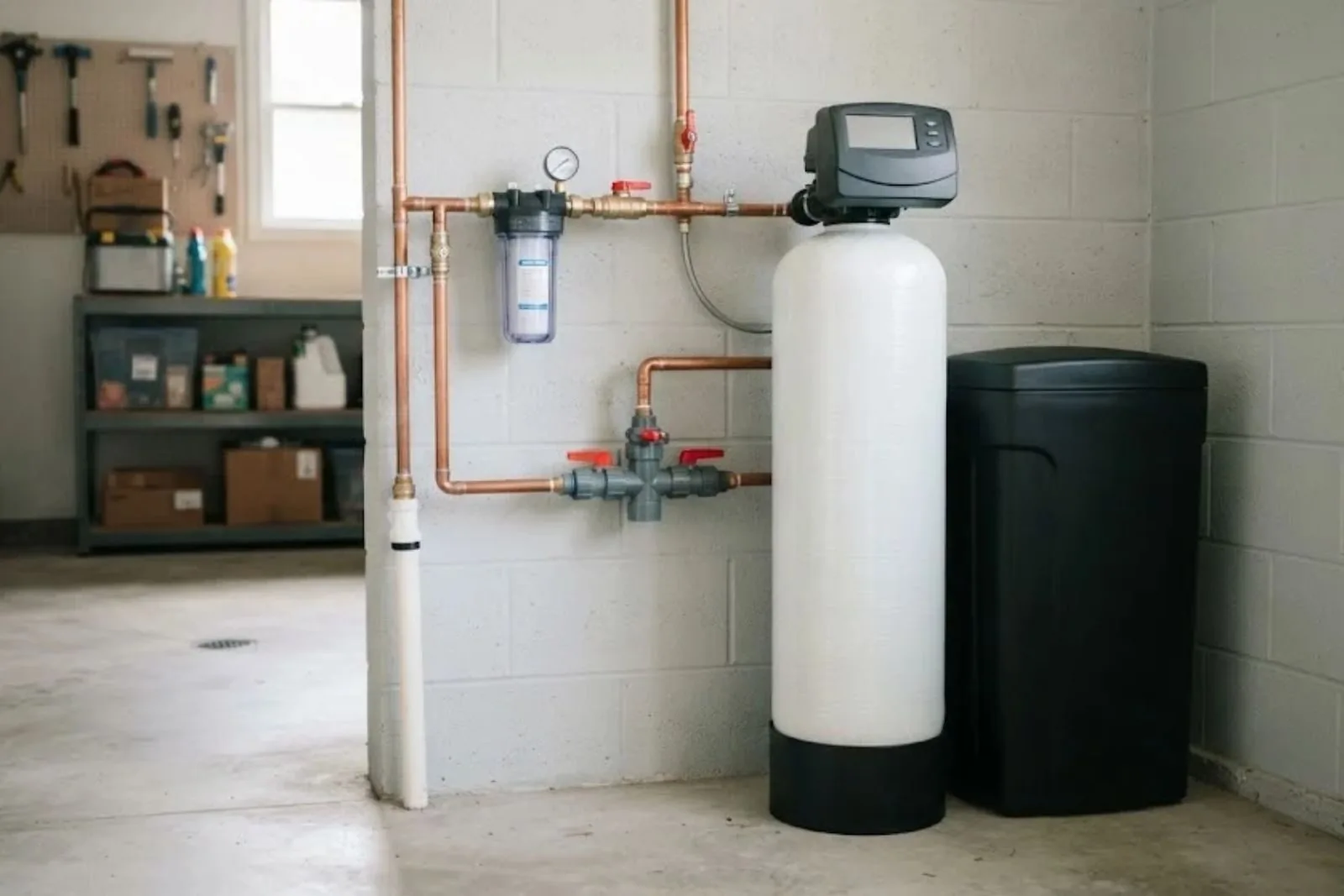
SystemsWhat each system does
| System | Does | Does not |
|---|---|---|
| Salt-based softener | Removes hardness minerals that cause scale | Does not filter chlorine or sediment |
| Sediment filter | Catches grit and rust particles | Does not soften |
| Carbon filter | Reduces chlorine taste and odor | Does not soften |
| Reverse osmosis at the sink | Reduces many dissolved solids for drinking and cooking | Treats only one tap |
| Conditioner (salt-free) | Alters scale formation without removing minerals | Does not remove hardness |
Look for systems that carry NSF/ANSI certification, such as NSF/ANSI 44 for softeners and NSF/ANSI 53 and 58 for certain filters and reverse osmosis units. The label tells you what the unit has been tested to reduce.
EffectsWhy scale matters for plumbing
Scale builds inside water heaters, tankless heat exchangers, faucet aerators and dishwasher parts. It narrows pipes, cuts flow and shortens appliance life. A softener can limit that buildup, and our tankless water heater page explains how scale affects on-demand units.
ProcessInstallation and service
Test and plan
We review test results and where the unit will sit.
Plumb the bypass
A bypass valve lets you isolate the system for service.
Connect and drain
We connect supply, a drain for regeneration and power.
Set up and explain
We program the unit and show you how to add salt.
Keep in mind that a softener adds a small amount of sodium and needs periodic salt. If anyone in the household watches sodium intake, ask your doctor, and ask us about a separate drinking water filter.
Codes and standards
Look for equipment certified to NSF/ANSI 44 for softeners and to NSF/ANSI 53 or 58 for filters and reverse osmosis units. Those are published standards that test what a unit actually reduces.
Not sure what your water needs?
Call and we will explain how to test your tap and what the results mean.
A softener installs on the main line, so plumbing installation work may be needed for new valves or a drain. If scale has damaged your heater, water heater replacement is the next step.
FAQsWater softener and filtration questions in Prescott Valley
Ask your water utility for its annual water quality report, or test your tap. We do not quote a hardness number without a source.
A softener treats hardness. A filter treats taste, odor or sediment. A test tells you which one matters for your home.
A properly set softener should not make water taste salty. It adds a small amount of sodium, and a separate drinking filter is an option.
Check the salt regularly and have the unit serviced as the maker advises. We can set up a schedule.
Reducing scale can ease strain on heating elements and heat exchangers. It does not stop all wear.