Step one: add up your peak flow
List the fixtures that might run at the same time. A shower and a kitchen sink at once is a common peak. Add their flow rates to get the gallons per minute your heater needs to supply.
Federal rules cap new showerheads at 2.5 gallons per minute, and many run lower. Check your own fixtures, since older ones may flow more.
| Fixture | Typical flow range (gpm) | Notes |
|---|---|---|
| Shower | 1.5 to 2.5 | Per showerhead |
| Bathroom sink | 0.5 to 1.5 | Hot side only |
| Kitchen sink | 1.5 to 2.2 | Hot side only |
| Dishwasher | 1.0 to 2.0 | During fill |
| Clothes washer | 1.5 to 3.0 | Hot cycle |
Step two: find the temperature rise
Temperature rise is the target hot water temperature minus the incoming water temperature. If the incoming water is 50 degrees and you want 120, the heater needs to raise it by 70 degrees. If the incoming water is 70, the rise is only 50.
A heater is rated for a flow at a given temperature rise. At a larger rise, the same unit delivers fewer gallons per minute.
Cold seasonWhy winter decides
Incoming water is coldest in winter, so the rise is largest and the heater delivers the least. A unit sized for summer can fall short in January. We size for the coldest month so you do not run short.
Our crews measure incoming water temperature during a site visit when needed, which gives a more accurate result than a guess.
Sizing checklist
- List the fixtures that run together at peak
- Add their flow rates in gallons per minute
- Find the coldest incoming water temperature
- Choose a target of about 120 degrees Fahrenheit
- Match to the unit rating at that rise
- Confirm the gas line or electrical service can feed the unit
A worked example
Suppose a household runs one shower at 2.0 gallons per minute and a kitchen sink at 1.5 gallons per minute at the same time. That is 3.5 gallons per minute of peak hot water flow. If winter incoming water is 45 degrees and you want 120 degrees, the rise is 75 degrees.
You would look for a unit that can deliver about 3.5 gallons per minute at a 75 degree rise. Many units deliver less at that rise, so a larger model or a second unit may be needed.
| Peak flow | Winter rise | What to look for |
|---|---|---|
| 2.0 gpm | 60 degrees | A smaller unit rated for that rise |
| 3.5 gpm | 75 degrees | A mid-size gas unit or two electrics |
| 5.0 gpm | 75 degrees | A large gas unit with a larger gas line |
| 6.0 gpm or more | 75 degrees | Two units or a larger commercial-style unit |
Common sizing mistakes
- Sizing by the number of bathrooms instead of peak simultaneous flow
- Using summer incoming water temperature
- Forgetting that the gas line may be too small
- Choosing a unit rated at a smaller temperature rise than you need
- Ignoring a low flow tap that never triggers the unit
A good plumber asks about your habits, such as whether two showers often run at once. If a quote skips that conversation, ask for the calculation. For service in nearby towns, see Chino Valley.
Codes and standards
Flow rates in this guide follow the federal limit of 2.5 gallons per minute for new showerheads, according to the U.S. Department of Energy. Makers publish a flow chart by temperature rise in each unit manual, and that chart is the number to trust.
Prescott Valley note: size for the cold months
Prescott Valley sits at about 5,100 feet. The 1991 to 2020 average lows are about 25 degrees Fahrenheit in December, 26 in January and 28 in February. Cold air chills exposed pipes and the incoming water, so the temperature rise a heater must provide is larger in winter than in summer.
We size tankless units for the coldest stretch, not for a July afternoon. If your plumber quotes a unit that is just large enough for summer, ask what it delivers at your winter incoming temperature.
Gas or electric at your size
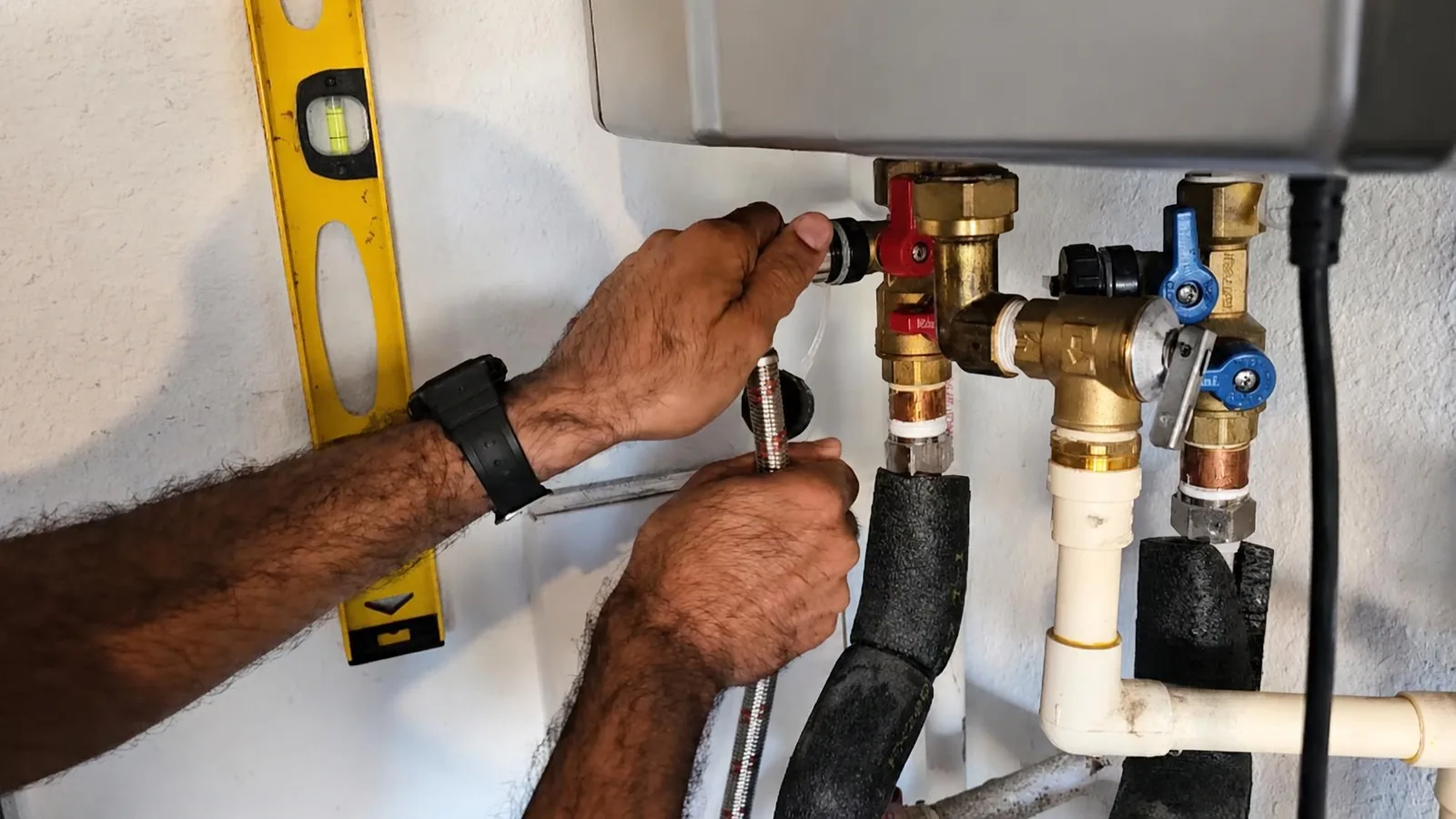
At a larger size, gas has an advantage. A gas unit can heat a high flow with a comparatively small burner footprint. An electric unit sized for the whole house needs heavy wire and a large breaker capacity, and many older panels cannot carry it.
If your home has gas, a gas tankless unit is often the easier route. If not, a smaller electric unit for one bathroom may be practical. Ask the plumber to check the panel before you buy.
Check the quoteQuestions to ask before you accept a quote
A good quote answers these
- What flow rate does the unit deliver at my winter temperature rise?
- Will my gas line and meter supply the unit, or does the line need to be upsized?
- Where will the vent run and what material is it?
- Is an isolation valve kit for flushing included?
- What does the warranty cover on the heat exchanger and the parts?
If the quote leaves out the gas line, the vent or the flush valves, ask. Those items are where the final bill grows.
When in doubt, size up one step. A unit with spare capacity runs cooler, lasts longer and handles the occasional extra shower without complaint.
Not sure what size you need?
Call and we will run the numbers for your home.
A larger unit often needs a larger gas line and vent. Our tankless water heater page covers the supporting work. If a standard tank suits you better, see water heater replacement. We also serve Dewey-Humboldt and Chino Valley.
FAQsTankless sizing questions for Prescott Valley homes
Add the flow rates of fixtures you run together, then match that to a unit rated at your winter temperature rise.
Hot water fades or turns lukewarm when several fixtures run. A larger unit or a second unit fixes it.
Often yes. A tankless unit fires at a high rate, so the gas line and meter must supply it.
Yes. Some homes use two units to serve different parts of the house.
It can reduce wait time at distant fixtures. It adds cost and may reduce efficiency, so discuss it with your plumber.