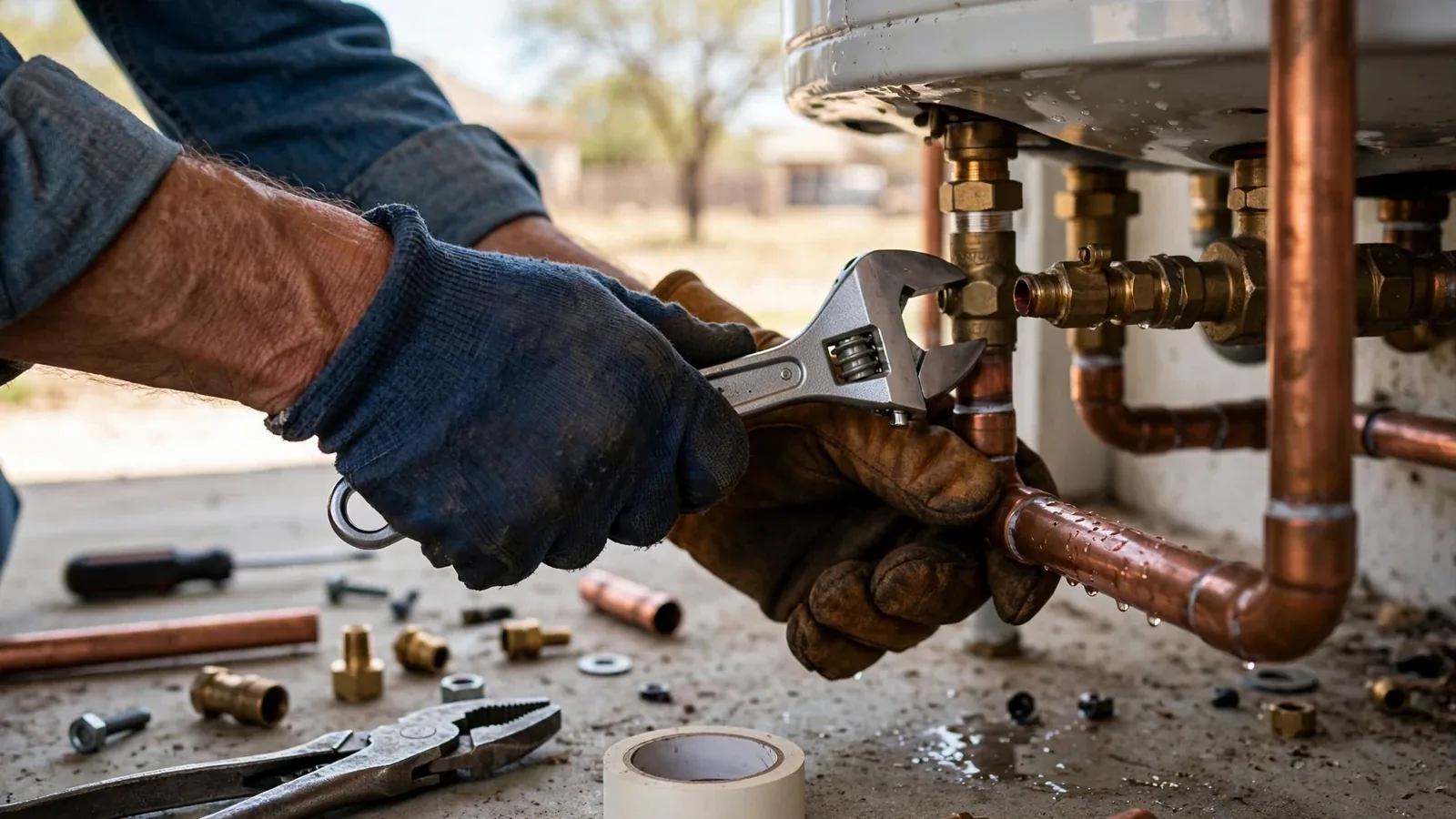
What an anode rod actually does
Inside a steel tank, a thin glass lining protects the metal. Tiny gaps in that lining let water reach the steel. The anode rod is made of magnesium or aluminum, and it corrodes first because it is more reactive than steel. As long as the rod has metal left, the tank is protected.
Rods are consumed over time. Hard water and warm water speed that up. A rod that is thin, bare in spots or coated in white scale is near the end.
SignsHow to tell it is time
Signs the rod is worn
- The tank is more than three or four years old and the rod has never been checked
- The rod looks pencil-thin or has bare steel showing at the core
- Hot water has a rotten egg smell, which can point to a reaction at the rod
- Rust-colored hot water appears but cold water runs clear
- Popping sounds from scale on the tank floor
Tools and prep
- A 1-1/16 inch socket and a long breaker bar or an impact wrench
- A new anode rod that matches your tank, or a flexible segmented rod if headroom is tight
- Teflon tape or pipe thread sealant rated for potable water
- A garden hose and a bucket
- Gloves and a helper if the tank is tight against a wall
Turn off the power or the gas first. Close the cold water inlet valve, open a hot faucet to let air in and drain a few gallons from the tank so the water level drops below the rod. The rod is usually on the top of the tank under a cap or fitted into the hot water outlet.
StepsReplacing the rod
Loosen the old rod
Fit the socket and use steady pressure on the breaker bar. Rods are often tight and need a firm pull.
Pull it out
You need about six inches or more of headroom above the tank. A segmented rod bends if headroom is short.
Wrap and install the new rod
Wrap the threads and thread the new rod in by hand, then tighten with the socket.
Refill and check
Open the inlet valve, let air out through a hot faucet and watch for leaks before restoring power or gas.
When the rod will not come out
A rod that has been in for many years can be seized in the tank. Forcing it can damage the tank threads or break the rod head. If the rod will not turn after steady pressure, stop. At that point the tank is likely near the end of its life, and replacement may make more sense than a repair.
Our water heater replacement page explains what a swap involves, and water heater repair covers the problems that a new rod will not fix.
Common mistakesMistakes that turn a simple job into a leak
- Skipping the drain-down, which lets water run down your arm when the rod comes out
- Forgetting thread tape, which can leave a weeping joint at the top of the tank
- Using a regular socket that is too short and slipping off the hex head
- Overtightening a new rod until the tank threads strip
- Restoring power before the tank is full, which can burn out an electric element
The last point matters most. An electric heating element that fires while it is out of water fails within seconds. Always open a hot faucet and wait for a steady stream before you switch the breaker back on.
Gas units have a similar rule. Make sure the tank is full before you relight the pilot or reset the gas control.
Reading the rodWhat the rod looks like at each stage
| Condition | What you see | What to do |
|---|---|---|
| Healthy | Thick, mostly smooth metal with light pitting | Put it back and check again in two years |
| Worn | Thin in places, flaking, core wire showing in spots | Replace it soon |
| Spent | Bare steel core, pencil-thin or broken pieces | Replace it now, and flush the tank |
| Coated in white scale | Hard buildup covering the rod | Replace it and consider a flush or a filter |
If pieces of rod are in the bottom of the tank, flush the tank after you finish. A garden hose on the drain valve will carry most of the fragments out.
Keep the old rod and compare it to the new one. The two should be the same length and have the same head.
Codes and standards
According to most tank makers, the anode rod is a maintenance item that your manual describes, and removing or replacing it should follow those instructions. Tanks are built to ANSI Z21.10.1 for gas and UL 174 for electric.
Prescott Valley note: tank age and winter lows
The 2020 census counted 21,276 housing units in Prescott Valley, and the town grew from 8,858 residents in 1990 to 38,822 in 2010. Many tanks installed in that growth window are now old enough that an anode check is worth doing. If you have never checked yours, put it on the list.
A heater in a garage faces cold nights, with a January average low of about 26 degrees Fahrenheit at about 5,100 feet. Cold incoming water makes the heater work harder. Ask your water utility for its annual water quality report, or test your tap, to see how hard your water is, since hardness is the main driver of rod wear.
Several homeowners also ask about hiring the job out. A plumber can check the rod during any water heater visit, flush the tank and test the relief valve at the same time. We serve Chino Valley and Dewey-Humboldt for that kind of visit.
Stuck rod or a leaking tank?
Call and a plumber will tell you whether it is worth fixing.
Powered anodes and other options
If your water has a rotten egg smell, a different rod material or a powered anode may help. A powered anode uses a small electric current and does not wear out like a metal rod. It costs more up front, and it needs power at the heater.
We also see homeowners add an in-line filter to reduce what reaches the tank. If you are weighing a bigger change, water softener and filtration is the next page to read.
FAQsAnode rod questions for Prescott Valley homes
Many makers suggest checking the rod every few years. Replace it when it is thin, heavily coated or has bare core wire showing.
It slows corrosion but cannot repair a leak that has already started. A leaking tank needs to be replaced.
Yes in many cases, but shut off the gas and power first. If you are not comfortable, a plumber can do it quickly.
A tank past about ten years, a seized rod or rust at the base suggests the tank is near the end. Ask a plumber to look at it.
It can be. Bacteria can react with a magnesium rod and produce a sulfur odor. An aluminum or powered rod and a tank flush can help.