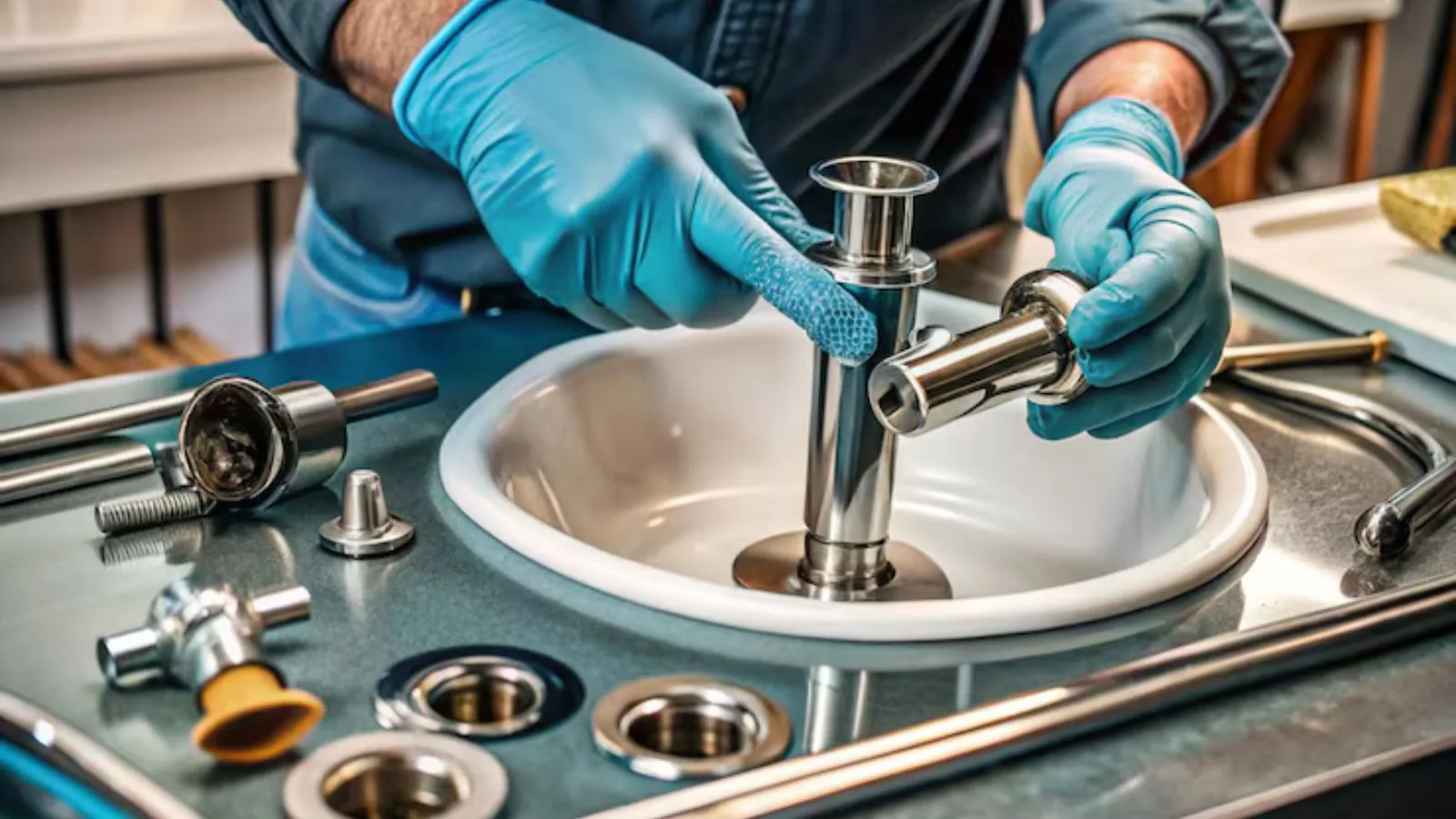
Where the water is coming from
Dry the faucet and run the water. Watch where the first drops appear. Water at the base of the handle points to a worn stem seal or O-ring. Water at the spout points to a worn cartridge or seat. Water under the sink points to the supply lines.
Knowing the source saves you from replacing parts that were fine.
Older styleTwo-handle compression faucets
Remove the handle by unscrewing the cap and the screw underneath. Under it you will find a packing nut and a stem. Tighten the packing nut slightly to stop a leak at the handle. If that does not work, replace the packing washer or O-ring.
If the leak is at the spout, replace the washer and seat at the bottom of the stem.
Common styleSingle-handle cartridge faucets
Pry off the cap on the handle and remove the screw underneath. Lift the handle off and look for a retaining nut or clip holding the cartridge. Pull the cartridge out and inspect the O-rings. Replace the O-rings, or the whole cartridge if it is cracked.
Coat new O-rings with plumber grease so they seat smoothly and last longer.
Parts you may need
- A new O-ring set sized to your faucet
- A replacement cartridge for your brand and model
- Plumber grease for the seals
- A hex key set for set screws
- Penetrating oil for a stuck handle
Mineral buildup and a stuck handle
A handle that is stiff or sticks often has scale in the stem. Soak the parts in vinegar for an hour and scrub with a soft brush. Do not force a stuck handle, or you may snap the stem.
Hard water leaves chalky deposits that wear seals faster. If you suspect that is behind repeated leaks, ask your water utility for its annual report or test your tap.
Step by stepReplacing the stem on a compression faucet
Shut off the water
Close the fixture valves under the sink and open the faucet to drain it.
Remove the handle and bonnet
Take off the cap and screw, lift the handle and unscrew the packing nut.
Pull the stem
Lift out the stem and look at the washer and the O-ring.
Replace and reassemble
Fit new parts, snug the packing nut and test for leaks.
Take the old stem and washer to the store. Stems vary in length and thread count, and matching them by sight saves a return trip. If the seat inside the valve is pitted, a seat wrench can remove it, and a new seat costs little.
Do not over-tighten the packing nut. A turn that is too hard stops the leak but makes the handle stiff and wears the new packing quickly.
Warning signsHandle leaks that point to a bigger problem
A leak at the handle is a nuisance. Water that runs down the inside of the wall or under the vanity floor is more serious. A stained cabinet bottom, a musty smell or a soft spot under the sink suggests the leak has been running for a while.
In those cases, shut off the fixture valves, dry the area and call a plumber. Our Dewey-Humboldt crews handle fixture calls in the area as well.
Codes and standards
According to the EPA WaterSense program, a faucet that drips once per second can waste thousands of gallons a year. A seal that costs very little is worth replacing quickly.
Chino Valley and Prescott Valley note: who supplies your water
In Chino Valley, the Town Utilities Division delivers drinking water, and you can contact it at its office on Rodeo Drive for water quality information. In Prescott Valley, ask the Town for its annual water quality report. Mineral content is the reason handle seals wear differently from one home to another.
If your home uses a private well, the seal wear depends on what your well produces. A simple test of your tap gives a starting point for deciding whether a softener or a filter is worth considering.
If the leak is more than a handle seal, our crews in Chino Valley and nearby towns can fix valves and fixtures in one visit.
Quick referenceA short list of what each leak location means
| Where it leaks | Likely cause | Typical fix |
|---|---|---|
| Around the handle base | Worn O-ring or packing | Replace the O-ring or tighten the packing nut |
| From the spout when off | Worn washer, seat or cartridge | Replace the washer, seat or cartridge |
| At the swivel spout base | Worn spout O-rings | Replace the spout O-rings |
| Under the sink | Supply line or shutoff valve | Replace the line or the valve |
| Inside the wall | Failed valve body or fitting | Call a plumber |
How long a repair should last
A new O-ring or cartridge should hold for years when the faucet is otherwise healthy. If the leak returns within a few months, check for mineral buildup, a pitted valve seat or a handle that is loose and rocking on the stem. A rocking handle wears new seals in a hurry, so tighten the set screw and make sure the handle sits square on the stem.
Handle still leaking after a new O-ring?
Call and a plumber will find the real cause.
When to stop and call
Call a plumber if the valve body is cracked, the handle will not come off, water is leaking inside the wall or the shutoff valves will not close. A shower or tub valve behind tile is also a plumber job, since the repair involves opening the wall. Our faucet repair page covers those cases.
For a leak that you cannot trace, leak detection finds hidden water without tearing out the wall.
FAQsLeaky handle questions for Prescott Valley homes
A worn O-ring, packing washer or cartridge seal is the usual cause. Replace the seal and the leak stops in most cases.
Sometimes. On a compression faucet, a slight turn on the packing nut can stop a leak. Do not overtighten.
Remove the cap and screw, then wiggle the handle gently. A handle puller helps. Penetrating oil on the stem can loosen it.
A small leak can still waste several gallons a day. It also damages the countertop and cabinet.
If the body is corroded, parts are no longer made or repairs keep failing, a new faucet is a better use of money.