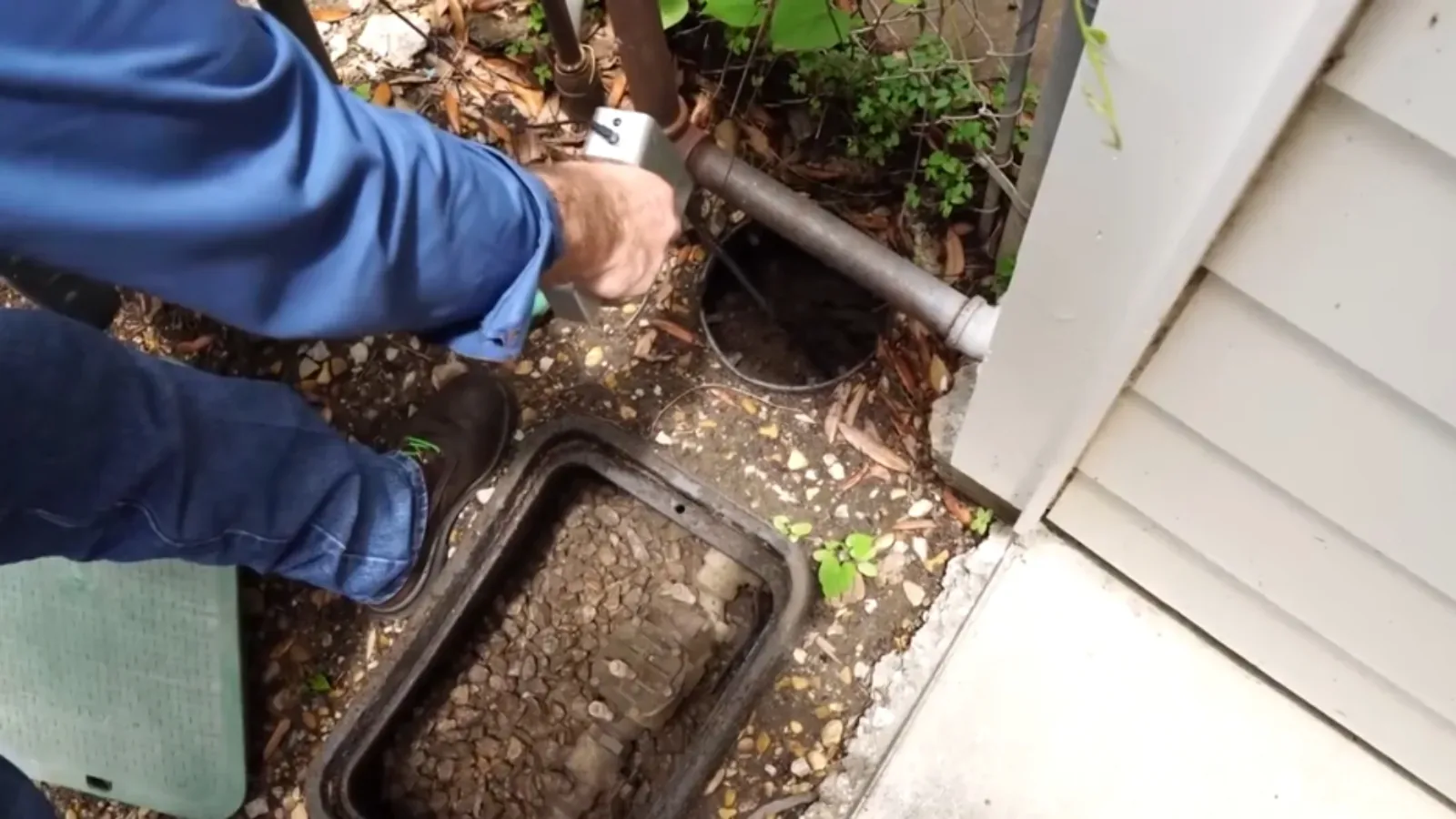
The two-minute meter test
- Turn off every faucet and appliance that uses water, including ice makers and irrigation.
- Find the water meter, usually in a box near the street, and lift the lid.
- Look at the small leak indicator, often a triangle or a small dial that spins when water is flowing.
- Write down the reading, wait fifteen to thirty minutes and check again.
- If the numbers moved or the indicator spins, water is escaping.
Meter faces vary, so ask your utility how to read yours. Do not touch the utility valve, which belongs to the utility.
Step twoThe toilet dye test
Toilets cause most silent leaks. Add a few drops of food coloring to the tank, wait fifteen minutes without flushing and look at the bowl. If color appears, the flapper is leaking.
A flapper leak can waste many gallons a day without making a sound. Replacing a flapper is a low-cost fix. Our guide to the toilet repair service covers what else to look at.
Hidden spotsOther places to look
| Place | What to check | Sign |
|---|---|---|
| Irrigation and hose bibs | Valves stuck open, broken heads, dripping spigots | Wet patches, running sound |
| Water heater | Relief valve and fittings | Dripping discharge pipe |
| Under sinks | Supply lines and traps | Damp cabinet floors |
| Water softener or filter | Bypass and drain | Water at the drain line |
| Service line to the house | Soft ground, low pressure | Wet yard, meter moves |
If the meter keeps moving
Close the main shutoff to the house and watch the meter. If it stops moving, the leak is inside the house. If it keeps moving, the leak is between the meter and the house, in the service line. Our water line repair page explains that case.
A professional leak detection visit uses listening and thermal tools to find the leak without opening walls. Leak detection explains the process.
Track itHow to track your usage over a week
If the meter test finds nothing, start a simple log. Read the meter at the same time each morning and each evening for a week. Write down the numbers and note what ran during the day, such as laundry, irrigation or guests.
A leak shows up as a steady rise at night or while the house is empty. Normal use rises in the morning and evening and goes flat when nobody is home.
| Pattern | What it suggests | Next step |
|---|---|---|
| Steady use overnight | A leak somewhere | Run the meter and dye tests |
| Spikes on irrigation days | Irrigation is the main user | Check heads, timers and zones |
| One big jump on a single day | A one-time event such as a filled pool or a stuck valve | Ask what ran that day |
| Slow rise month after month | Growing leak or higher use | Compare against last year |
Questions for your utility
- Ask for your usage history by month and by billing cycle
- Ask whether your meter was read or estimated
- Ask what units your meter reports
- Ask whether any leak adjustment program exists
- Ask whether the meter can be tested for accuracy
A plumber is the right call when the meter moves with everything off, when you find damp spots or when you hear running water. Our Chino Valley page covers calls from well and service line owners there.
Codes and standards
According to the EPA WaterSense program, the average household wastes nearly 10,000 gallons of water a year to leaks, and ten percent of homes waste 90 gallons a day or more. A meter test is the fastest way to know if you are one of them.
Prescott Valley note: irrigation season
Prescott Valley averages about 15 inches of precipitation a year, so lawns and landscaping rely on irrigation for much of the year. A stuck sprinkler valve or a broken head can run for hours without anyone noticing. Check irrigation zones first when a bill jumps in summer.
Your bill comes from the Town or its water provider. Ask the Town utility billing office for your usage history by month. A sudden step up from a steady baseline points to a leak, while a seasonal rise points to irrigation.
Common leaks in newer homes
Homes that went up during Prescott Valley growth years are mostly newer, and their typical leaks are small ones. A failed toilet flapper, a weeping water heater fitting, a stuck irrigation valve or a failed pressure regulator account for many high bills.
A pressure regulator that has failed lets full street pressure into the house. That can make small leaks worse and it is worth testing if your fixtures sound noisy or your hoses bulge.
Check the pressure with a simple gauge on a hose bib. If it reads well above what is normal for homes, ask a plumber about the regulator.
Next stepsFixing what you find
If the dye test shows a leaking flapper, replace it and check the meter again. If the irrigation test shows a stuck valve, call the irrigation contractor or fix the valve. If the meter still moves after those checks, the leak is probably in a supply line, and a plumber with listening and thermal tools can find it without cutting walls. Keep your meter readings, because they help the plumber and support an insurance claim.
If your bill stays high even after every fix, ask the utility to test the meter. Meters can drift with age, and a test settles the question with data instead of guesses.
Meter moving with everything off?
Call and a plumber will schedule a detection visit.
We serve Chino Valley and Dewey-Humboldt, where well and service line leaks are common. A water bill that rises with no cause may also reflect a changed meter or a billing error, so ask the utility to confirm the reading.
FAQsHigh water bill questions for Prescott Valley homes
Open the meter box, find the dial or digital display and note the reading. Ask your utility which units it uses. Many show gallons or cubic feet.
It depends on household size, landscaping and season. Compare to your own past bills rather than to a neighbor.
Yes. A silent flapper leak can waste many gallons a day. The dye test finds it.
Some utilities offer help reading a meter or checking usage. Ask your provider what it offers.
Some policies cover the cost of finding a covered leak. Check your policy and ask your agent.