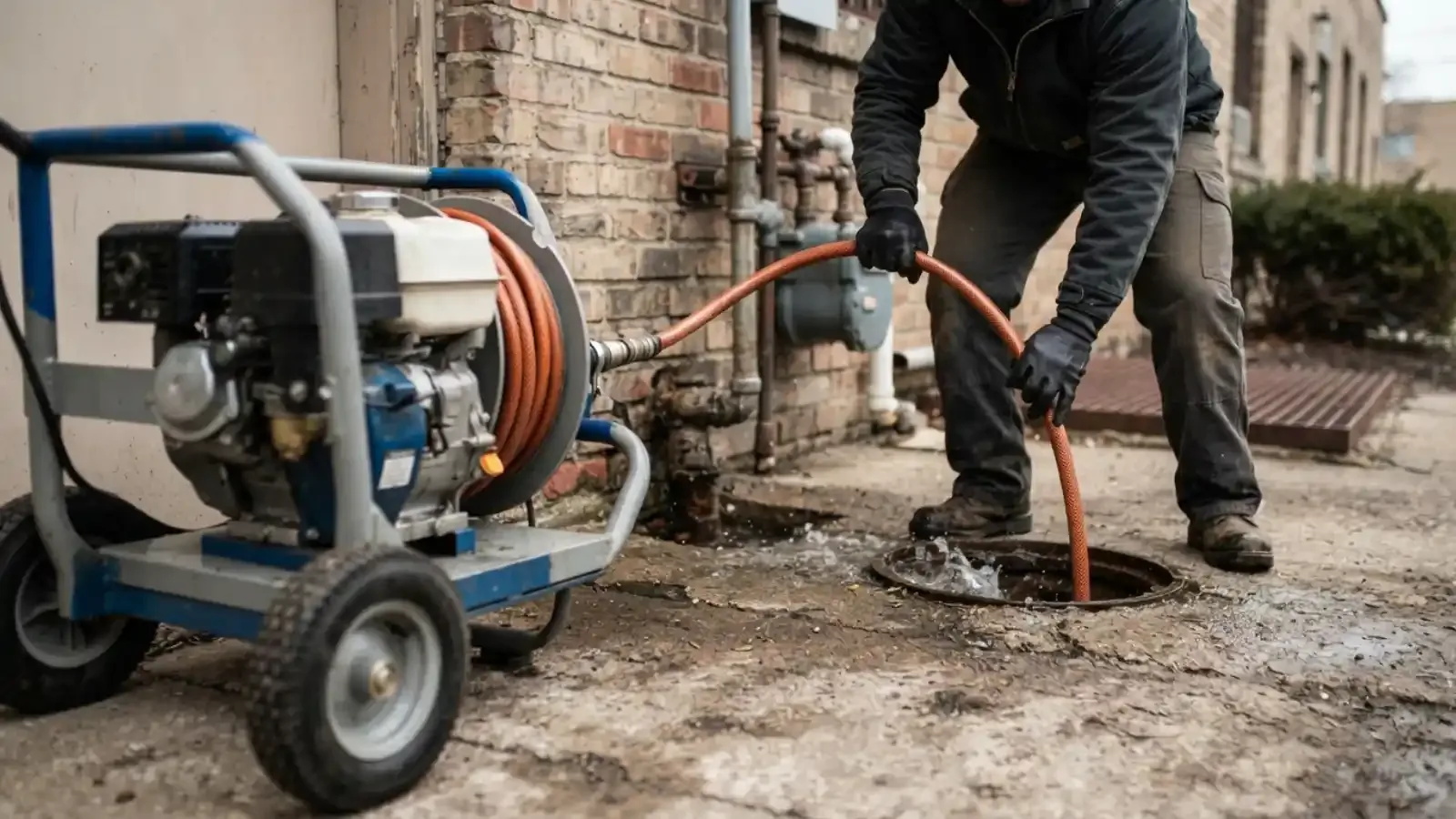
When a backup calls for hydro jetting
A cable opens a path. Jetting restores the pipe. When a line has backed up more than once, a cable alone often leaves the same buildup behind, and the next clog arrives soon after.
We reach for the jetter when a restaurant-style grease buildup, heavy scale or root growth is the cause. We always look with a camera first so we know the pipe can handle the pressure.
How it worksWhat the jetter actually does
A hose with a nozzle feeds into the line through a cleanout. Water exits the nozzle in forward and rear jets, cutting the clog and pulling the hose forward. As the hose is drawn back, spinning jets scour the pipe wall and flush debris toward the main.
Pressure is adjusted for the pipe. Cast iron, clay and plastic each take a different setting, and a pipe that is cracked or collapsed should not be jetted at all.
Cable alone
- Opens a hole through the clog
- Leaves grease on the pipe walls
- Clog often returns in weeks
- Low cost per visit
Hydro jetting
- Scours the whole pipe wall
- Removes grease, scale and fine roots
- Clears for months to years in suitable pipe
- Needs a camera check first
Where jetting fits in older and newer homes
Prescott Valley grew from 8,858 residents in 1990 to 38,822 in 2010 per the census, so most of the housing here is fairly recent. Newer lines are usually plastic, and they can take jetting well. Older lines in Dewey-Humboldt and nearby rural properties can include clay and cast iron, which need a lighter hand and a camera first.
If your property uses a septic system instead of a town sewer, ask us before jetting, because the pressure and discharge matter for the tank and leach field.
Signs a line is ready for jetting
- The same drain clogs again within a few weeks of a cable job
- Slow drains throughout the house, not just one fixture
- A gurgling toilet when another fixture runs
- A foul odor at floor drains
- A camera shows grease or scale narrowing the pipe
Codes and standards
Jetting pressure is chosen to suit the pipe, and the industry reference for judging pipe condition from camera footage is the NASSCO Pipeline Assessment Certification Program coding system. We describe what we see in plain language instead of codes.
Same clog, again?
Call and ask whether jetting is the right step for your line.
Many homes get a cable first and jetting after. Our drain cleaning page explains when a cable is enough. For a main line that serves the whole house, see sewer line cleaning. If the camera finds a break, sewer line repair is the next step.
FAQsQuestions about hydro jetting in Prescott Valley
Yes. A sewage backup is urgent and our 24/7 line takes those calls day and night. We offer same-day appointments when available, and the dispatcher confirms the earliest window for your address.
It is safe in pipes that are structurally sound. We run a camera first and set pressure for the pipe material. A cracked or collapsed pipe is not jetted.
A snake opens a hole through a clog. A jetter scours the pipe wall with high-pressure water and flushes the debris out.
It depends on what caused the clog and on the pipe. Grease and scale can take months to return in a cleaned line, while root intrusion comes back faster unless the line is repaired.
It can cut and flush roots from a pipe joint. If roots keep returning, the joint is damaged and needs repair.
Yes for backups. The 24/7 line takes emergency calls, and the dispatcher confirms what is open for your address.