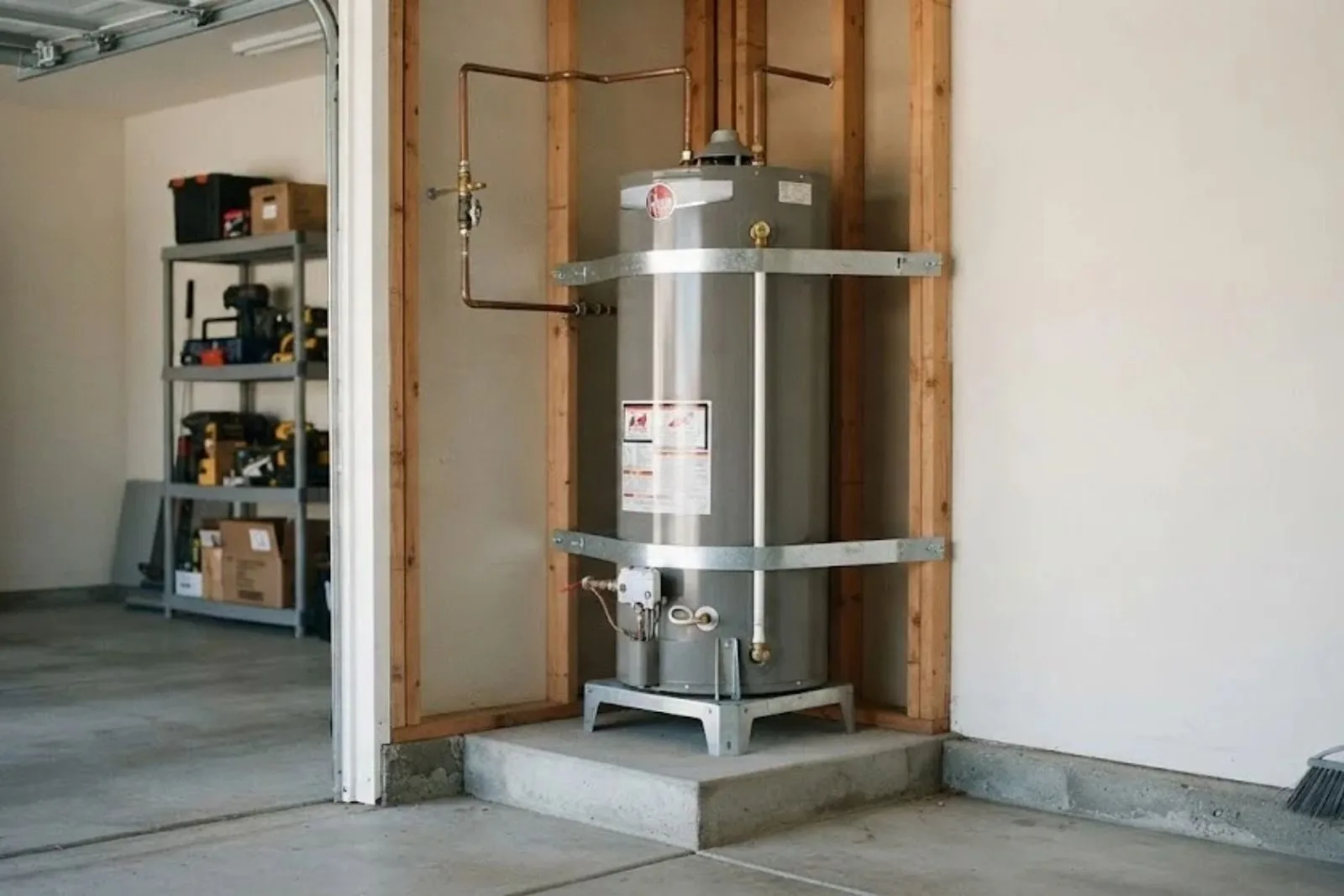
Shut it off first
Do these now
- Switch off the breaker for an electric heater or set the gas control to off
- Close the cold water supply valve above the tank
- Place a bucket or towels to catch water
- Keep the area dry and away from outlets
- Take photos of the leak for your records
Five places water can come from
| Source | How to tell | Fix |
|---|---|---|
| Supply or outlet fitting | Water drips from a pipe connection at the top | Tighten or replace the fitting |
| Temperature and pressure relief valve | Water drips from the discharge pipe | Replace the valve and check pressure |
| Drain valve | Drips at the bottom spigot | Tighten or replace the valve |
| Condensation | Beads of water on a cold tank in humid weather | No repair needed |
| Tank shell | Water seeping from the base or seam | Replace the tank |
Relief valve drips
A relief valve opens when the pressure or temperature in the tank is too high. A valve that drips often points to thermal expansion in a closed system, a thermostat set too high or a worn valve. An expansion tank can fix the first cause.
Never plug the discharge pipe. The valve is a safety device, and blocking it can lead to a dangerous pressure buildup.
ReplacementThe tank itself
Steel tanks rust from the inside. When the shell fails, water seeps through, often as a slow leak that grows. A leak from the base or the seam means the tank cannot be repaired. Turn off the power and the water and plan a swap.
Our water heater replacement page covers the steps, and water heater repair covers smaller issues that a part fixes.
Test itA quick way to tell condensation from a leak
- Dry the tank and the floor completely with a towel.
- Lay a sheet of dry paper or cardboard under the tank.
- Check it after an hour and again after several hours.
- If the paper stays dry in the morning, condensation was the cause, or the leak is intermittent.
- If it is wet again, trace the drip upward to its source.
Condensation shows up on a gas heater in the first few minutes after it fires, when cold water meets a warm burner. It fades as the tank warms. A real leak keeps coming and often grows.
If the drip is clear and stops after the tank heats up, the water is likely condensation. A leak that has a rust trail, mineral crust or a damp insulation jacket points to the tank.
MistakesWhat not to do
- Do not plug or cap the relief valve discharge pipe
- Do not keep running the heater with water pooling underneath
- Do not tighten fittings while the tank is hot and under pressure
- Do not ignore a small leak, since the shell is failing
- Do not drain a hot tank without letting it cool
If the tank is old, treat any leak as a replacement signal. A tank that has lasted a decade or more has little margin, and a small seep can become a flood overnight.
Our water heater repair page lists fixes for the problems that a new part can solve.
Codes and standards
Relief valves are made to ANSI Z21.22 and the model plumbing codes call for a discharge pipe from the valve to a safe place. A drip from that pipe is a sign the valve is working or worn, not a feature to plug.
Prescott Valley note: garage heaters and cold nights
Prescott Valley counted 21,276 housing units in 2020. Many homes put the heater in a garage or an exterior closet, where January lows near 26 degrees Fahrenheit put stress on pipes and fittings. A fitting that was tight in summer can weep after repeated expansion and contraction in cold weather.
If you find a leak at a fitting in winter, close the cold supply and call. We serve Prescott Valley and also nearby Dewey-Humboldt and Chino Valley, where lows run colder.
How to prepare for a replacement visit
Have this ready when you call
- The tank size and fuel type, which are printed on the label
- The age of the tank, also on the label or the serial number
- A photo of the tank, the pipes and the space around it
- Notes on where the water is coming from
- Whether the tank is in a garage, closet or attic
With those details, a dispatcher can usually give you a price over the phone. The plumber also knows what parts and which unit to bring, which can mean a same-day swap.
PreventionProtecting the next heater
A new heater lasts longer with a few details. A drain pan with a line to a safe spot catches future leaks. A thermal expansion tank prevents the pressure spikes that make relief valves drip. A flush once a year clears sediment. An anode rod check every few years slows corrosion. None of these is dramatic, and together they extend the life of the tank and reduce the chance of a morning flood.
Whatever you decide, do not leave a leaking tank running while you shop around. Shut off the water and power, then compare prices with the leak stopped.
Water pooling under the tank?
Call the 24/7 line and a plumber will tell you what to shut off.
Protect the floor
Wet drywall and subfloor can grow mold within a couple of days. Dry the area, run a fan and check the wall behind the heater. If water has been leaking for a long time, call a restoration company as well.
FAQsWater heater leak questions for Prescott Valley homes
It can become one. Shut off the water and power, then call a plumber to find the source.
No. A leak from the tank shell cannot be repaired. The tank must be replaced.
High pressure, high temperature or a worn valve are the common causes. A plumber can test the valve and check your water pressure.
Many policies cover sudden water damage but not the heater. Check your policy and photograph the damage before cleanup.
Yes. A cold tank in warm, humid air can bead and drip. If the drip stops when the weather dries out, it was likely condensation.